

An example from our seller stories
An inherited San Antonio house with title issues
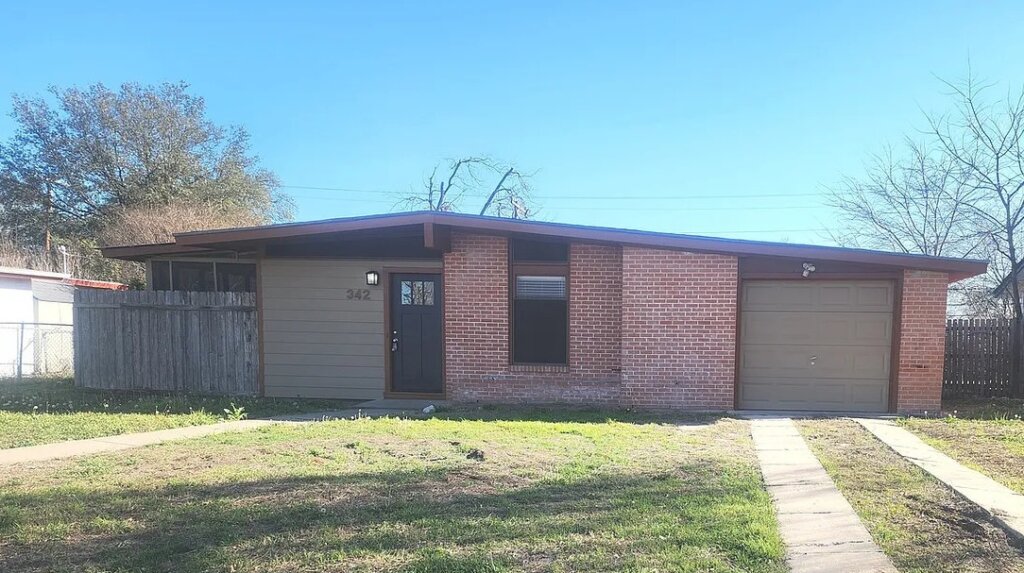
The situation: The family inherited a house with multiple title defects. Resolving the title issues took nearly 90 days.
What happened: We stayed with the purchase through the title process and closed once title was clear. The family did not have to manage repairs or cleanout.
Title questions can affect the closing date. You can start a conversation about the property while the paperwork is being reviewed.
This describes one past sale. Every property and closing timeline is different.
Read this seller storyGeneral information for San Antonio and Bexar County families. This page is not legal or tax advice. Last reviewed: May 2026.
If you’ve inherited a house in San Antonio or anywhere in Bexar County, you don’t need another generic “we buy houses” pitch. You need someone local who can look at the actual situation — the will or lack of one, the heirs, the condition of the house, the title, the back taxes, the cleanout — and walk you through every real option.
That’s what Bexar Street Group does. We’re licensed Texas real estate professionals and local investors who have helped Bexar County families with inherited and probate property since 2016. Because we are licensed agents who also buy with our own cash, we can compare two honest paths instead of pushing you toward one:
- A direct as-is sale to us — no repairs, no cleanout, and no seller commissions on a direct-sale option.
- Traditional listing guidance — if the open market would actually serve you better, we’ll tell you. A listing relationship only exists if it is separately signed.
No pressure. No assumption that a direct sale is the right answer. We review the property, the paperwork, and the family situation, and lay out what each path realistically looks like for you. Call or text (210) 316-6953.
Selling an Inherited House in San Antonio: The Short Version
- Who can sell? Usually an executor with Letters Testamentary, a court-appointed administrator with Letters of Administration, a trustee, or the people with legal authority to sign, as confirmed through probate and title review.
- Can you sell during probate? Often yes — in an independent administration, the executor can typically sell estate real property without a separate court order.
- No will? Texas offers an affidavit of heirship, a determination of heirship, or (for personal property only) a small estate affidavit.
- Taxes? Texas has no inheritance or estate tax. Federal estate tax only hits estates over $15,000,000 in 2026. Stepped-up basis usually keeps capital gains low if you sell soon after the death.
- Repairs? Not required for a direct as-is sale — leave the contents, the deferred maintenance, and the old paperwork.
- How long? A direct as-is sale can often close in about two to four weeks once authority to sell is documented.
Who Has Legal Authority to Sell an Inherited House in Texas?
Quick answer: In Texas, a title company will not close a sale until someone with documented authority signs the deed — usually an executor, a court-appointed administrator, a trustee, or all the legal heirs together. Here’s how each works in Bexar County.
Executor with Letters Testamentary (when there is a will)
If the decedent left a valid will naming an executor, the will must first be admitted to probate. Once a Bexar County statutory probate court admits the will and qualifies the executor, the County Clerk issues Letters Testamentary. Those Letters are the document a title company asks for at closing.
Administrator with Letters of Administration (when there is no will)
With no will, a court may appoint an administrator and issue Letters of Administration. The administrator can sell estate real property much like an executor, but the process to get appointed is different and usually slower.
Heirs acting together
When there is no administration and no will, the legal heirs under Texas intestacy law may be able to convey title themselves — usually with an Affidavit of Heirship recorded in the Bexar County deed records, or a court-ordered determination of heirship. Title companies differ on what they’ll accept and how much “seasoning” they want, so this path takes coordination among the heirs.
Trustee
If the house was held in a revocable living trust, the trustee — not the heirs personally — has authority under the trust document, and the property usually avoids probate entirely.
Until one of these is in place, the house generally cannot close. You don’t have to figure out which bucket you’re in alone — that’s exactly what a no-pressure review with us is for. This page is general information about how these processes work in Texas; it is not legal advice. For decisions about a specific estate, speak with a qualified Texas probate attorney.
“Inherited House” vs. “Probate House” — What’s the Difference in Texas?
People use the terms interchangeably, but they describe different stages. An inherited house is any property you received because someone died — through a will, intestacy, a trust, a transfer-on-death deed, or joint ownership with right of survivorship. A probate house is an inherited property where the estate is still moving through a Texas probate court and authority to sell still has to be established. Some inherited houses never go through probate at all; others sit in probate for months. The right next step depends entirely on which situation you’re actually in.
The Texas and Bexar County Paths to Selling an Inherited Home
Texas gives families more options than most states. Here are the main ones our neighbors in Bexar County tend to use.
Independent administration (the most common path)
This is the path Texas law is designed to encourage. Under the Texas Estates Code (Chapter 402), an independent executor can typically sell estate real property without going back to the judge for each transaction. Letters Testamentary often issue roughly 45 to 60 days after the initial application is filed, and a simple independent administration commonly runs about 6 to 9 months — including the four-month creditor-claim window Texas requires — though every case varies.
Dependent administration (court-supervised sales)
When the will doesn’t allow independent administration, the heirs don’t all agree, or the estate is contested, a court may require a dependent administration. Here the administrator must get court approval for major actions, including selling real estate — meaning hearings, notice requirements, and a court order confirming the sale. Expect this path to add weeks or months and noticeably more cost.
Muniment of title (a uniquely Texan shortcut)
Under the Texas Estates Code (Chapter 257), when there’s a valid will, no unpaid debts other than debts secured by real property (a mortgage is typical), and no need to formally administer the estate, a Bexar County probate court can admit the will to probate as a muniment of title. No executor is appointed — the court’s order itself becomes the chain-of-title document. The application must be filed within four years of death, and within 180 days of the order an affidavit must be filed showing the will’s terms have been carried out. For clean “Mom or Dad left the house to the kids and there are no other big debts” situations, muniment of title is often the fastest, least expensive probate path — frequently 30 to 60 days, depending on the court’s docket.
No will — affidavit of heirship and determination of heirship
If no one ever probates a will and the decedent died without one, Texas allows heirs to record an Affidavit of Heirship in the Bexar County deed records as nonjudicial evidence of who the heirs are. Two disinterested witnesses who knew the family swear to the marital and family history. Under the Texas Estates Code (Chapter 203), once the affidavit has been on file for five years it becomes prima facie evidence of those facts. Many Texas title companies will insure a sale before that, but they often want the affidavit to “season” and may require all known heirs to sign. For complicated heirship — unknown heirs, blended families, missing relatives — a formal court determination of heirship is sometimes necessary.
Small estate affidavit — what it actually does (and what it does not)
This is where a lot of online content gets families in trouble. Under the Texas Estates Code (Chapter 205), a Small Estate Affidavit can be used when the decedent died without a will and the value of the probate estate (excluding the homestead and exempt property) is $75,000 or less. It’s mainly designed to let heirs collect personal property — bank accounts, vehicles, household items — without a full administration.
Here’s the part that surprises most families: a Texas Small Estate Affidavit generally cannot transfer real property. There’s one narrow exception — if the only real property in the estate is the decedent’s homestead, and the people inheriting it were homesteading there with the decedent at the time of death (typically the surviving spouse or minor children), the affidavit can transfer that homestead. Outside that fact pattern, the small estate affidavit is the wrong tool for selling a house, and using it will create title problems the buyer’s title company will catch. If you’ve been told a small estate affidavit will let you sell an inherited Bexar County house, let us look at the actual situation with you before you spend money on the wrong filing.
When Multiple Heirs Inherit the Same Bexar County House
This is one of the most common situations we see — three siblings, four cousins, a parent and an adult child, heirs spread across multiple states.
Tenancy in common
When two or more people inherit the same Texas property and nothing else is set up, they almost always own it as tenants in common, each with an undivided fractional interest. Any one heir can usually sell their own interest, but selling the whole house cleanly to a regular buyer requires every heir to sign.
Buyout, mediation, and family settlement
When one heir wants to keep the house and others want out, a buyout based on a current appraisal is often cleanest. When heirs simply can’t agree on price or timing, mediation usually resolves things faster and cheaper than litigation, and a written family settlement agreement is often the document that finally lets a sale move forward.
Partition actions and the Uniform Partition of Heirs’ Property Act
When negotiation fails, any co-owner can file a partition action under the Texas Property Code (Chapter 23) or, for property inherited from a relative, Chapter 23A — the Uniform Partition of Heirs’ Property Act. Chapter 23A gives co-tenants a right to buy out the heir who filed before the court can force a sale, and requires a fair-market appraisal first. Partition is a real tool, but it’s slow and expensive: an uncontested partition commonly runs around $5,000 or more in attorney fees, and contested partitions regularly exceed $20,000, with timelines stretching many months. Most families do better resolving things directly — we frequently structure a sale that pays each heir their share directly at closing, so no one waits on anyone else.
Taxes on an Inherited Texas House — The Honest Version
General information, not tax advice. Confirm your specific situation with a CPA or tax professional.
Texas inheritance and estate tax
The Texas Comptroller confirms Texas has no state inheritance tax and no state estate tax. You do not owe Texas a separate tax for inheriting a house. As of 2026, only five states still impose any state inheritance tax — Kentucky, Maryland, Nebraska, New Jersey, and Pennsylvania. (Iowa repealed its inheritance tax for deaths on or after January 1, 2025.)
Federal estate tax in 2026
Federal estate tax is paid by the estate, not by you as the heir, and only applies to very large estates. The IRS confirmed that for deaths in 2026 the federal estate and gift tax exclusion is $15,000,000 per individual (up from $13,990,000 in 2025) under the law signed in July 2025, with inflation adjustments going forward. For the overwhelming majority of Bexar County families, federal estate tax simply does not apply.
Stepped-up basis and capital gains
Under current federal tax law, inherited property generally receives a “stepped-up basis” equal to its fair market value on the date of death. If a parent bought the house in 1985 for $60,000 and it was worth $280,000 the day they died, your basis is $280,000 — not $60,000. Sell for $285,000 and your taxable gain is figured against $280,000, not the original price. For 2026, long-term capital gains on assets held more than a year are generally taxed at 0%, 15%, or 20% depending on your income and filing status. Most heirs who sell shortly after a death see little or no capital gains tax, but your numbers are your own — run them with a CPA.
Back property taxes in Bexar County
According to the Bexar County Tax Office, property tax statements are mailed each October and the full amount is due by January 31 to avoid penalty and interest. Bexar County also offers an optional Half-Payment Plan (half due November 30, half due June 30) available to all taxpayers, and a Quarter-Payment Plan available to homestead owners who are 65 or older, disabled, or disabled veterans. If the property is behind on taxes, that doesn’t disqualify a sale — back taxes can typically be paid out of the proceeds at closing, and we work with title companies that handle this routinely.
Repairs, Cleanout, Vacant Property, and Carrying Costs
The longer an inherited Bexar County house sits empty, the more it costs the estate. Property taxes keep running, and insurance on a vacant house often costs more than on an occupied one. Most standard homeowners policies include a vacancy clause that limits or excludes coverage once a property has been unoccupied for 30 to 60 consecutive days — the standard HO-3 policy, for example, specifically voids coverage for vandalism and glass breakage once a dwelling has been vacant more than 60 days before a loss. That can leave the estate exposed exactly when the risk is highest. Lawn care, A/C and plumbing failures during San Antonio summers, copper theft, and squatters are all real concerns we’ve watched families deal with.
Before you spend money on repairs or a cleanout, talk to us. If the open market is the right path, we’ll tell you which improvements actually return their cost in your specific San Antonio submarket and which don’t. If a direct as-is sale is the right path, you don’t need to touch the house — leave the contents, the deferred maintenance, the code issues, and the old paperwork. We handle the cleanout as part of the deal.
When Listing on the Open Market May Serve You Better
A traditional listing through a licensed Texas real estate agent isn’t a bad answer — sometimes it’s the right one, and we’ll be honest about that. A listing usually serves the family better when the house is in solid condition or needs only cosmetic work; the heirs aren’t in a rush and can wait the 30 to 90-plus days a normal Bexar County listing can take from sign-in-yard to funded closing; the family is comfortable with showings, inspections, and the possibility of a buyer’s financing falling through; and the numbers — after commissions, repairs, holding costs, and concessions — still beat what a direct as-is offer would net. If that’s the situation, we’ll walk you through a clear comparison and a referral. A listing relationship only exists if it is separately signed.
When a Direct As-Is Sale May Serve You Better
A direct as-is sale often serves the family better when the house needs significant repairs (roof, foundation, HVAC, electrical, plumbing); the house is full of belongings and a cleanout would take weeks the family doesn’t have; the heirs are spread across multiple states and need a clean, coordinated closing; there are back property taxes, code violations, or title issues that complicate a traditional listing; the estate is carrying costs the family wants to stop quickly; or privacy matters — no signs, no public showings, no open houses. In those cases, the certainty and speed of a direct sale, with no seller commissions on a direct-sale option, often nets the family more than waiting on the open market would.
How Bexar Street Group Helps — Two Honest Paths
Direct as-is sale option
We make a written offer based on the actual condition and the local San Antonio submarket. As-is means as-is — no cleaning, no repairs, no emptying the house. No seller commissions on a direct-sale option, and our written agreement states which standard closing costs we pay. We coordinate with the title company, your probate attorney if you have one, and the other heirs.
Listing guidance and referral
If the open market is honestly the path that serves you best, we’ll say so, and we can refer you to a licensed Texas real estate agent (a listing relationship only exists if separately signed) and walk you through the comparison so you can decide with eyes open. There’s no fee for the review, no obligation, and no pressure.
Real Bexar County Situations We’ve Helped Families Navigate
Four siblings, four states, one Southside house. A family inherited their mother’s home on the Southside. The four adult children lived in Texas, California, Arizona, and Florida and couldn’t agree on price, timing, or who’d manage repairs. We made a direct as-is offer, coordinated signatures remotely with all four heirs, and closed in about two weeks. Each sibling received their share directly at closing.
No will, deferred maintenance, and an affidavit of heirship. A son inherited his father’s home near Woodlawn Lake. There was no will, and the house hadn’t seen real updating since the 1980s — roof, HVAC, and foundation work all needed. We walked him through the affidavit of heirship process with the title company, made an as-is offer, and closed once the paperwork seasoned and cleared.
Probate with back taxes paid at closing. A family inherited a home in the Medical Center area with several years of back Bexar County property taxes attached. We structured the closing so the back taxes were paid directly out of the proceeds at the title company. The family walked away with a clear net check and no remaining tax exposure.
Hoarder situation with code violations. A property near the East Side had been a hoarder home for years and had open City of San Antonio code violations. The heirs weren’t in a position to clean, repair, or coordinate inspections. We bought it in its existing condition, took on the cleanout, and closed on the heirs’ timeline.
These are real situations. Every house, family, and estate is different — yours will look different from these examples. That’s the point of an honest review up front.
Documents to Gather Before You Decide
You don’t need everything below to talk to us — call at any stage. But these documents typically come into play before a sale closes:
- A certified copy of the death certificate.
- If there is a will: the will itself, and Letters Testamentary issued by a Bexar County probate court.
- If there is no will: Letters of Administration, an Affidavit of Heirship recorded in the Bexar County deed records, or a court determination of heirship.
- If muniment of title was used: the order admitting the will to probate as a muniment of title.
- If the property was in a trust: the trust agreement and trustee certification.
- The most recent deed showing how the decedent took title.
- Recent Bexar County property tax statements and any payment history.
- Any mortgage statements, payoff information, or HELOC documents.
- A title search or prior owner’s title policy if you have one.
- A list of known heirs and their contact information.
If you don’t have all of this yet — most families don’t when they first call — that’s fine. We can help you understand what you actually need and which documents to chase first.
Bexar County Probate Courts and Where Things Get Filed
Bexar County has three statutory probate courts — Probate Courts No. 1, No. 2, and No. 3 — that handle wills, estate administrations, and heirship matters. The Bexar County Clerk’s Probate Department, located at 100 Dolorosa, Suite 104, in downtown San Antonio, processes probate applications, Letters, and related filings, and the County Clerk also maintains the deed records where affidavits of heirship and muniment-of-title orders are recorded.
We are not the courts and we are not your attorney. But because we work in Bexar County every week, we know what these courts and the County Clerk’s probate department typically ask for, and we work alongside title companies and probate attorneys who handle this every day.
Areas We Serve Across San Antonio and Bexar County
We buy and broker inherited properties across the Greater San Antonio market — the Southside, East Side and Dignowity Hill, Westside and the Lackland area, Medical Center and Balcones Heights, Alamo Heights and Terrell Hills, Stone Oak and the far North Side, Downtown, Monte Vista, King William, Woodlawn Lake, and neighborhoods throughout Bexar County. If your inherited property is in or near Bexar County, talk to us.
Frequently Asked Questions: Selling an Inherited or Probate House in San Antonio
Can I sell an inherited house before probate is complete in Texas?
Often yes. A title company won’t close until someone with documented authority can convey title. In an independent administration, an executor can typically list and contract to sell as soon as Letters Testamentary are issued, frequently without a separate court order. In a dependent administration, court approval is usually needed for the sale itself. So in many Bexar County cases you can sell while probate is still open, as long as the authority piece is in place by closing.
Who has legal authority to sell an inherited house in Texas?
Usually an executor named in the will (after the will is admitted to probate and Letters Testamentary issue), a court-appointed administrator with Letters of Administration when there’s no will, a trustee if the property was titled in a trust, or all the legal heirs together — often supported by a recorded affidavit of heirship or a court determination of heirship. The title company at closing ultimately decides what documentation it requires.
What if there is no will?
Texas intestacy law decides who the heirs are. Families typically use a court-appointed administration, a recorded affidavit of heirship, or — in narrow homestead-only situations — a small estate affidavit. Multiple heirs almost always need to coordinate before a sale can close. We work with families in this exact situation regularly and can help map out the most realistic next step.
What if multiple heirs don’t agree on selling?
Start with direct conversation, then mediation, then a written family settlement agreement. If deadlock continues, any co-owner can file a partition action under the Texas Property Code (Chapter 23, or Chapter 23A for property inherited from a relative). Partition is slow and expensive — uncontested matters commonly run around $5,000-plus in attorney fees, contested ones regularly exceed $20,000 — so a negotiated buyout or coordinated sale is usually better. We frequently structure deals that pay each heir their share directly at closing.
Can a small estate affidavit transfer a house in Texas?
Generally no. A Texas small estate affidavit (Estates Code Chapter 205) is mainly for personal property in intestate estates where the probate estate is $75,000 or less, excluding the homestead and exempt property. It can transfer real property in only one narrow case: when the only real property is the decedent’s homestead and the people inheriting it were homesteading there with the decedent at the time of death — typically the surviving spouse or minor children. For most inherited Bexar County houses, it’s the wrong tool.
What is muniment of title?
It’s a streamlined Texas probate option (Estates Code Chapter 257). When there’s a valid will, no unpaid debts other than secured real-estate debt, and no need for formal administration, a Bexar County probate court can admit the will to probate as a muniment of title. No executor is appointed; the order itself becomes the chain-of-title document for real property. The application generally must be filed within four years of death. For simple cases it’s often the fastest, least expensive probate path.
Do I owe inheritance tax in Texas?
No. Texas has no state inheritance tax and no state estate tax. As of 2026, only five states impose any inheritance tax — Kentucky, Maryland, Nebraska, New Jersey, and Pennsylvania. Federal estate tax applies only to very large estates; for 2026 the federal exclusion is $15,000,000 per individual, so the vast majority of Bexar County families owe none. You may have federal capital gains exposure if you sell well above the stepped-up basis — confirm with a CPA. This is general information, not tax advice.
What if the house has back property taxes or a mortgage?
Both are common and usually solvable at closing. Bexar County property taxes are billed in October and due by January 31; any unpaid balance plus penalties and interest can typically be paid out of the sale proceeds. An existing mortgage works the same way — the lender’s payoff comes out of proceeds and the remaining equity goes to the estate or heirs. Title companies handle this routinely.
Do I need to clean out or repair the house before selling?
It depends on the path. A traditional listing usually benefits from some cleanout and repair. On a direct as-is sale to us, no — leave the contents, deferred maintenance, code issues, and old paperwork. Before you spend money on repairs or cleanout, it’s worth talking through which path is realistically best, so you don’t pay for work that doesn’t need to happen.
How long does selling an inherited house in San Antonio usually take?
Mostly it depends on where you are in probate. If Letters are already issued in an independent administration, a direct as-is sale can typically close in roughly two to four weeks once title work is back. A muniment of title path is often 30 to 60 days. A dependent administration with court approval, or a contested matter, can take many months. We’ll give you a realistic timeline up front.
I’m just starting probate and don’t know what I’m doing — can Bexar Street Group still help?
Yes — this is one of the most common calls we get. We’re not attorneys and don’t replace one, but because we work in Bexar County probate property every week, we can help you understand the lay of the land, walk through your options at each stage, and connect you with Texas probate attorneys and title companies who handle these matters routinely. We can also make a contingent offer that closes once your authority to sell is documented.
Will I owe a commission if I sell directly to Bexar Street Group?
No. On a direct-sale option to us, there are no seller commissions. our written agreement states which standard closing costs we pay and you receive the agreed net at closing. If your family decides a traditional open-market listing is honestly the better path, that listing relationship is separate and only exists if you choose to sign one.
Talk to a Local, Licensed Texas Pro — No Pressure, No Commission on a Direct Sale
You don’t have to know what path you’re on. You don’t have to have all the documents. You don’t have to have the family aligned yet. Call us, text us, or fill out the form and we’ll set up a no-pressure review of the property, the paperwork, and the options on the table. Bexar Street Group has helped Bexar County families work through inherited and probate property since 2016, either by buying the house directly with our own cash or with a listing referral when that’s the right answer.
Call or text (210) 316-6953, or fill out the form at the top of this page.
¿Hablas español? Tenemos a alguien que puede ayudarte en español al (210) 316-6953.
Choose your next step
You can request a cash offer for the inherited house, compare selling as-is with listing, or read how our home-buying process works.
Gabriel is the contact for inquiries from this website. Meet Gabriel and learn about Bexar Street Group.
Sources and Further Reading
This page draws on official and authoritative sources, including the Texas Estates Code (Chapters 203, 205, 257, and 402), the Texas Property Code (Chapters 23 and 23A), the Texas Comptroller of Public Accounts, the Internal Revenue Service tax-year-2026 inflation adjustments, the Bexar County Tax Office, the Bexar County Clerk’s Probate Department, and Texas Law Help. It is provided as general information and is not legal or tax advice.
Need the official offices, forms, title contacts, cleanout help, and other next-step resources in one place? Use our Bexar County probate and inherited-property resource hub.